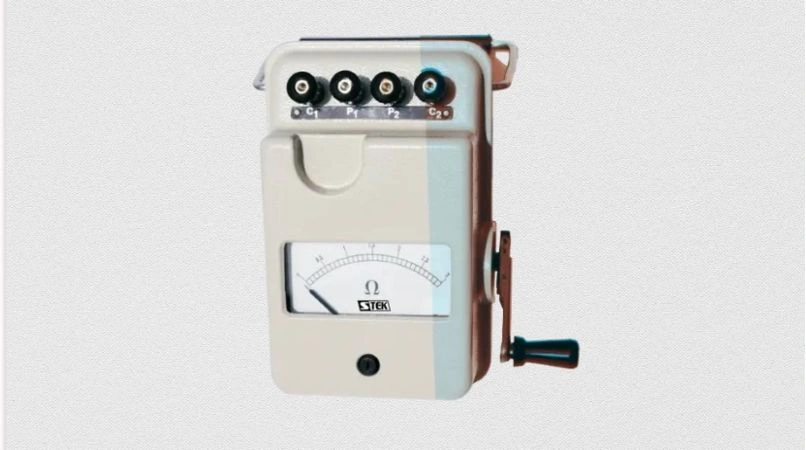
The Analog Earth Tester (Four-Terminal) is a specialized instrument used to measure ground (earth) resistance and ensure electrical safety by verifying proper grounding. Using a four-terminal (or four-point) measurement method, it delivers accurate, reliable readings even in varying soil conditions. The analog display provides real-time resistance values without dependence on batteries or digital electronics. Its rugged design makes it suitable for use in field environments, construction sites, and industrial installations.
Uses
Testing earth/ground resistance for electrical installations
Safety verification of grounding systems in buildings, factories, substations
Installation and inspection of lightning protection systems
Maintenance checks of earthing grids in industrial facilities
Compliance testing for electrical safety standards in construction and infrastructure projects
Table
Feature
Details
Type
Analog Earth (Ground) Resistance Tester
Method
Four-Terminal (Four-Point) measurement
Measurement
Earth / ground resistance (ohms)
Display
Analog (needle / meter) reading
Power
Often manual / doesn’t rely on complex electronics (depends on model)
Field testing, onsite verification, industrial installations
The Analog Earth Tester Four-Terminal provides a dependable, simple solution for checking and verifying grounding resistance — essential for safety, compliance, and reliable operation in electrical installations and infrastructure projects.